businessbriefs
10:37in productionCh. 1 · Flag, not force/ 10:37 · ceiling 15 min
Companies · Strategy

Iberia (airline)

1927

Iberia stopped being Spain’s independent flag carrier the moment it joined IAG — and started being a branded cost centre in a UK-registered airline group.

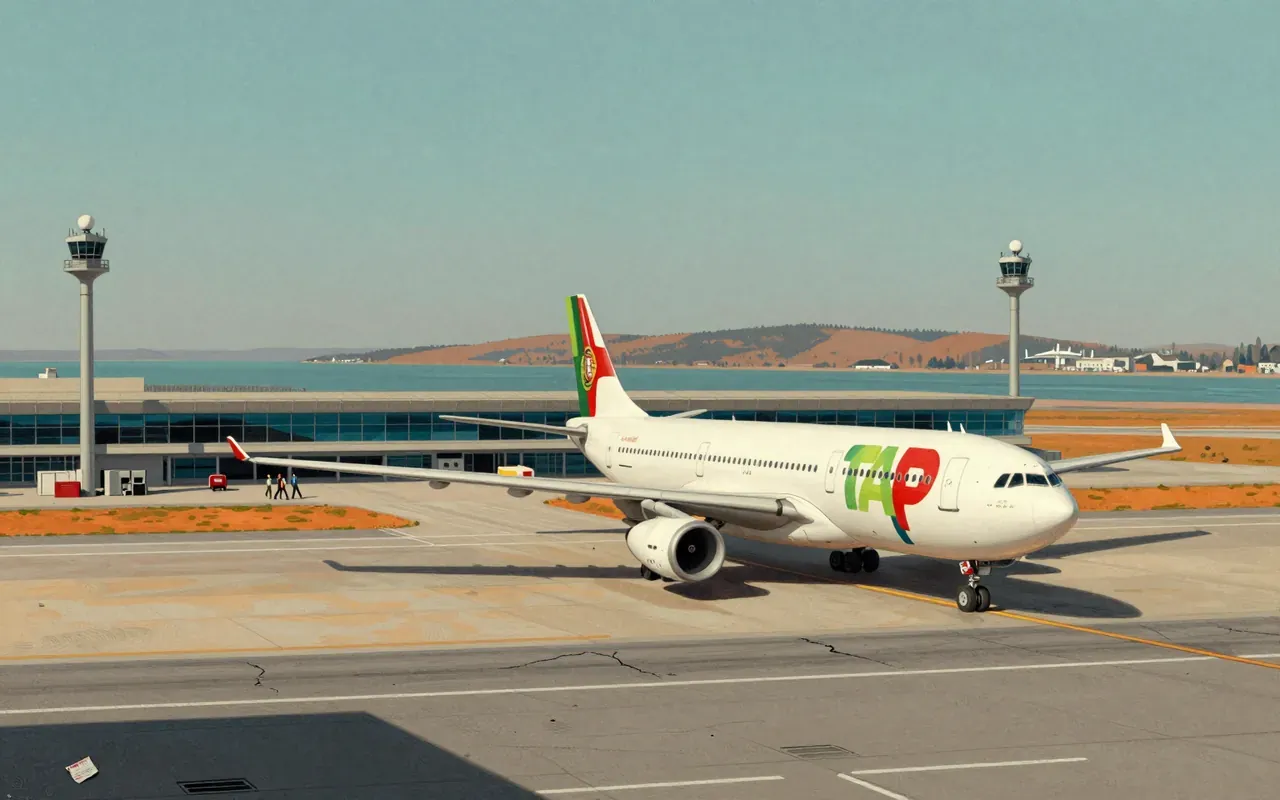
Iberia is Spain’s flag carrier, founded in 1927 and based in Madrid. It operates internationally from Madrid–Barajas Airport and offers ancillary services including aircraft maintenance, airport handling, IT systems, and in-flight catering. Since January 2011, it has been part of International Airlines Group (IAG), following a merger agreement signed with British Airways in April 2010 and approved by shareholders in November 2010. Its network covers over 109 destinations in 39 countries, plus 90 more via codeshare agreements.

Chapters & takeaways4
  1. 1:00
    Flag, not force

    Iberia is Spain’s flag carrier—and has been since 1927—but that status is now symbolic, not structural.

  2. 2:46
    The merger that wasn’t a merger

    The 2010 merger with British Airways created IAG—not a joint venture, but a UK-incorporated parent company that owns both airlines.

  3. 4:35
    Scale without sovereignty

    Its network reach—109 destinations plus 90 more via codeshares—depends entirely on IAG’s partner alliances, not its own commercial leverage.

  4. 6:42
    Four businesses, one brand

    It earns from maintenance, handling, IT, and catering—not just flying—making it a logistics operator disguised as an airline.

Worth your time?

Yes. Study the whole thing.

3.5/ 5
What works
  • It delivers scale through IAG’s consolidated procurement and route planning.
  • Its ancillary units serve third-party airlines—proving market viability beyond its own flights.
  • Its brand remains legally distinct and operationally active under IAG’s ownership.
What does not
  • It does not set its own fuel hedging policy.
  • It does not control its own frequent flyer programme's capital structure.
  • It does not decide its own fleet renewal schedule outside IAG coordination.
  • It does not negotiate bilateral air service agreements for Spain.
Study it if
  • Airline investors assessing IAG’s vertical integration
  • Policy researchers tracking EU state aid and flag carrier independence
  • Logistics managers benchmarking airport handling margins
Skip it if
  • Startups looking for founder-led disruption playbooks
  • Consumers comparing fare transparency or loyalty value
  • Historians seeking pre-1975 Spanish aviation policy detail
The written brief1 min read

What the company or idea is

Iberia is Spain’s flag carrier airline, founded in 1927 and headquartered in Madrid.

How it actually makes money

Iberia makes money by transporting passengers and freight, and through ancillary services: aircraft maintenance, airport handling, IT systems, and in-flight catering.

What works

Its integration into IAG gives it scale across 109 destinations in 39 countries—and access to 90 more via codeshares—without requiring organic network expansion.

What does not

It does not operate independently: since January 2011, it has been a subsidiary of International Airlines Group, with no standalone strategic or financial autonomy.

What to take from it

The merger with British Airways did not create a new airline but a holding company—International Airlines Group—that preserves legacy brands while centralising control, cost, and capital allocation.

Is it worth your time

Yes—if you are studying how national flag carriers evolve into vertically integrated, branded subsidiaries within multinational airline groups.

Same desk · Companies4 of 217
12:57
MeituanWang Xing · 2010Meituan is a Chinese technology company headquartered in Beijing that operates a platform for local services, including on‑demand food delivery, in‑store services, consumer reviews under Dazhong Dianping, hotel and travel bookings, and instant retail. It monetises through fees on its platform, taking a commission on food delivery orders and charging merchants for booking and in‑store services. Meituan’s rapid user growth is driven by its extensive coverage of local services, its integration of food delivery, in‑store services, and hotel bookings creating a one‑stop shop, and its large merchant base of 14.5 million active merchants providing network effects. Meituan faces regulatory scrutiny in China, its 2021 post by Wang Xing triggered a 7.1 % share plunge and anti‑monopoly investigation, and the company has been subject to scrutiny by Beijing Municipal Human Resources and Social Security Bureau. Meituan demonstrates the power of a diversified local‑services platform, its ability to scale across cities and internationally shows the importance of network effects, and its regulatory challenges highlight the need for compliance awareness. Meituan offers a case study in rapid scaling and diversification, but its regulatory risks caution investors.
10:56
ABBCharles Eugene Lancelot Brown · 1988ABB is a post-merger industrial incumbent whose value lies in proven, regulated, physical infrastructure — not software, platforms, or scalability stories.
10:50
AbbVie2012AbbVie is a textbook example of post-innovation pharmaceutical value extraction — built on a single blockbuster, sustained by patent thickets and pricing, checked only by biosimilars and congressional scrutiny.
11:08
Abu Dhabi National Oil Company1971ADNOC is the state-owned oil company of Abu Dhabi, UAE — founded by concession in 1939, ranked 12th globally by production, and expanding output to 5 million barrels per day by 2027. It is the UAE’s largest oil company. Output rose from ~2.5 mbpd in the 1990s to 2.9 mbpd in 2008 and 4.85 mbpd in 2024. It is described as efficient and well managed, but financially opaque. It is one of few oil companies increasing production amid climate pressure.
Up next in Business

Imperial Oil

Rockefeller Standard Oil · 1880 · 10:46

A national oil company built to block Rockefeller became his Canadian subsidiary — without changing its name.

10:46