businessbriefs
10:37in productionCh. 1 · What it is/ 10:37 · ceiling 15 min
Companies · Scandals

FirstEnergy

1997

A regulated monopoly built on coal and tree-trimming failures — not innovation.

FirstEnergy is a cautionary example of how regulatory protection sustains scale without demanding resilience — and how fuel choice, maintenance neglect, and bankruptcy converge in a single utility.

Chapters & takeaways5
  1. 0:57
    What it is

    FirstEnergy is not a startup or tech firm — it is a 1997 merger of two Ohio utilities, now a regulated electric monopoly.

  2. 2:29
    How it makes money

    It earns revenue from regulated ratepayer charges — not markets — and exited unregulated generation in 2020.

  3. 4:02
    Fuel lock-in

    99% of its 3,599 MW generation capacity comes from coal — a liability in decarbonising markets.

  4. 5:18
    Failure as infrastructure

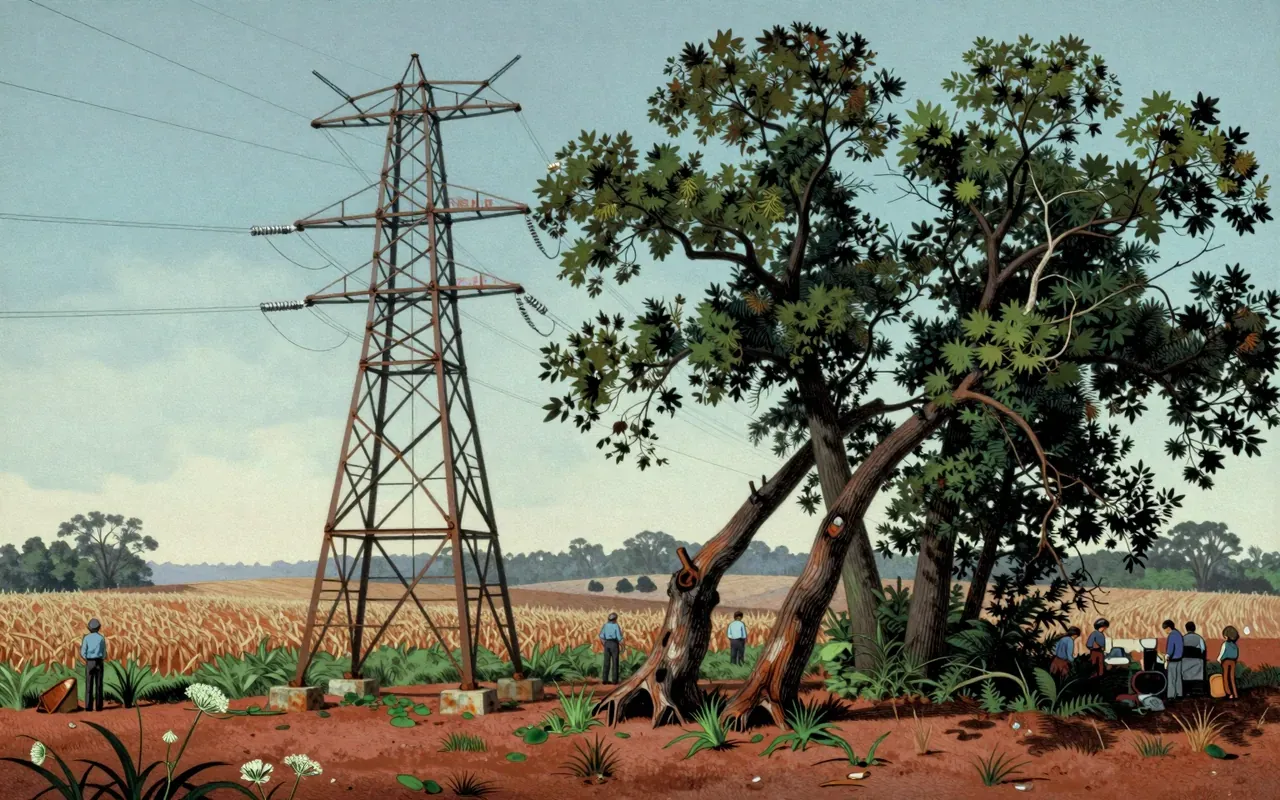
    The 2003 Northeast blackout began with FirstEnergy’s failure to clear trees near high-voltage lines in Ohio.

  5. 6:53
    Bankruptcy-driven retreat

    Its generation subsidiary collapsed in 2018 — forcing a 2020 split to preserve the regulated utility core.

Worth your time?

Yes. Study the whole thing.

3.5/ 5
What works
  • scale
  • regulatory stability
  • customer density
What does not
  • innovation
  • technology
  • disruption
Study it if
  • utility regulators
  • energy policy analysts
  • infrastructure investors
Skip it if
  • startup founders
  • venture capitalists
  • tech product managers
The written brief1 min read

What the company or idea is

FirstEnergy is a vertically integrated electric utility formed in 1997 by merger, operating ten regulated utilities across seven states.

How it actually makes money

FirstEnergy makes money by charging regulated rates for electricity distribution and transmission across seven states. It no longer operates competitive generation after 2020.

What works

Its scale — 6 million customers, 65,000-square-mile service area — delivers stable cash flow from ratepayer-funded infrastructure.

What does not

Its coal-heavy generation profile is financially and operationally brittle. Its 2003 blackout failure exposed chronic underinvestment in basic grid maintenance.

What to take from it

Regulated monopoly status insulates it from market discipline — but not from infrastructure failure or public accountability.

Is it worth your time

Yes — as a case study in how legacy utilities manage regulatory capture, fuel dependency, and systemic failure.
Same desk · Companies4 of 217
12:57
MeituanWang Xing · 2010Meituan is a Chinese technology company headquartered in Beijing that operates a platform for local services, including on‑demand food delivery, in‑store services, consumer reviews under Dazhong Dianping, hotel and travel bookings, and instant retail. It monetises through fees on its platform, taking a commission on food delivery orders and charging merchants for booking and in‑store services. Meituan’s rapid user growth is driven by its extensive coverage of local services, its integration of food delivery, in‑store services, and hotel bookings creating a one‑stop shop, and its large merchant base of 14.5 million active merchants providing network effects. Meituan faces regulatory scrutiny in China, its 2021 post by Wang Xing triggered a 7.1 % share plunge and anti‑monopoly investigation, and the company has been subject to scrutiny by Beijing Municipal Human Resources and Social Security Bureau. Meituan demonstrates the power of a diversified local‑services platform, its ability to scale across cities and internationally shows the importance of network effects, and its regulatory challenges highlight the need for compliance awareness. Meituan offers a case study in rapid scaling and diversification, but its regulatory risks caution investors.
10:56
ABBCharles Eugene Lancelot Brown · 1988ABB is a post-merger industrial incumbent whose value lies in proven, regulated, physical infrastructure — not software, platforms, or scalability stories.
10:50
AbbVie2012AbbVie is a textbook example of post-innovation pharmaceutical value extraction — built on a single blockbuster, sustained by patent thickets and pricing, checked only by biosimilars and congressional scrutiny.
11:08
Abu Dhabi National Oil Company1971ADNOC is the state-owned oil company of Abu Dhabi, UAE — founded by concession in 1939, ranked 12th globally by production, and expanding output to 5 million barrels per day by 2027. It is the UAE’s largest oil company. Output rose from ~2.5 mbpd in the 1990s to 2.9 mbpd in 2008 and 4.85 mbpd in 2024. It is described as efficient and well managed, but financially opaque. It is one of few oil companies increasing production amid climate pressure.
Up next in Business

First Solar

Harold McMaster · 1999 · 10:16

First Solar isn’t betting on solar’s future — it’s betting the U.S. government will keep paying for its specific kind of solar.

10:16