businessbriefs
10:40in productionCh. 1 · What’s in a name?/ 10:40 · ceiling 15 min
Startups & venture

Amgen

1980

Amgen didn’t disrupt pharma — it proved that cloning one human gene at a time could build a billion-dollar company.

Amgen’s origin story is unusually concrete: founded in 1980, public by 1983, two gene-cloning projects yielding two FDA-approved drugs by 1991. No vague mission statements — just molecules, milestones, and money raised to get there.

Chapters & takeaways4
  1. 1:24
    What’s in a name?

    Amgen began as Applied Molecular Genetics — a name that signals its method, not its market.

  2. 2:56
    Capital before clones

    Its 1983 IPO raised nearly $40 million — not seed money, but fuel for a multi-year, high-risk molecular hunt.

  3. 5:00
    One gene, one drug

    Two genes, two teams, two years of lab work — erythropoietin first, then G-CSF — produced two drugs.

  4. 6:38
    Markets before medicine

    It licensed Epogen to Kirin in 1984, then waited two years for FDA approval of Neupogen — proving commercialisation was slower than discovery.

Worth your time?

Yes. Study the whole thing.

4.5/ 5
What works
  • gene cloning as product development
  • IPO timing relative to R&D phase
  • licensing as risk mitigation
  • FDA approval as commercial inflection point
What does not
  • revenue
  • pricing
  • manufacturing cost
  • reimbursement
Study it if
  • biotech founders
  • regulatory strategists
  • life-sciences investors
Skip it if
  • marketing executives
  • policy analysts
  • health economists
The written brief1 min read

What the company or idea is

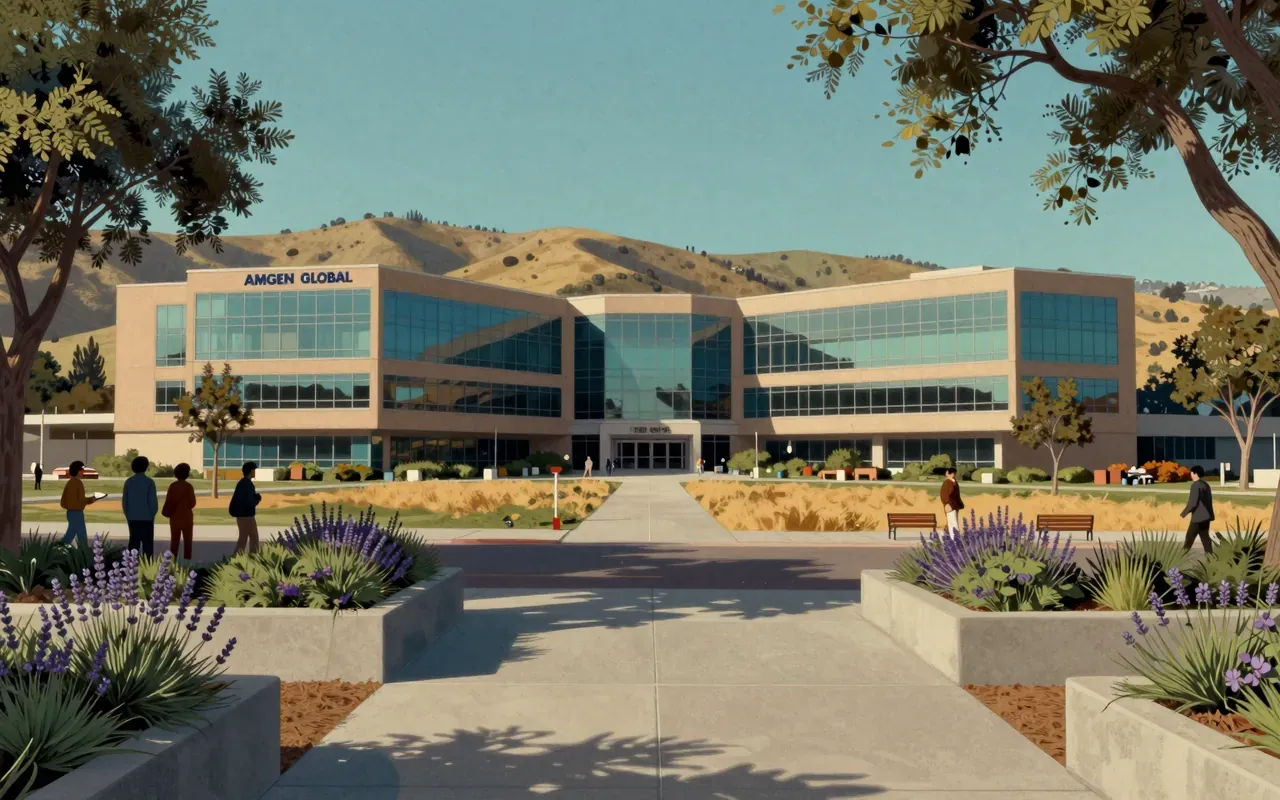
Amgen is a biopharmaceutical company founded in April 1980 in Thousand Oaks, California, originally named Applied Molecular Genetics. It focuses on discovering, developing, and commercialising protein therapeutics using recombinant DNA technology.

How it actually makes money

Amgen makes money by developing and selling biopharmaceuticals — specifically, recombinant proteins — to treat serious diseases. It retains US distribution rights for its own products while licensing rights elsewhere, as with Kirin Brewery in Japan for Epogen.

What works

Cloning specific human genes (erythropoietin, G-CSF) and converting them into therapeutics worked. Securing FDA approval for Epogen in 1989 and Neupogen in 1991 worked. A joint venture with Kirin for Japanese distribution worked. Going public in 1983 to fund that work worked.

What does not

The material says nothing about revenue, margins, manufacturing cost, or patient access barriers. It does not establish whether Epogen or Neupogen achieved broad clinical adoption, nor whether Amgen controlled pricing or reimbursement.

What to take from it

Amgen’s early success came not from platform versatility or speed, but from sustained, targeted molecular work: two years to clone erythropoietin, then a year to clone G-CSF — each yielding one approved drug. Its business model was narrow, asset-specific, and dependent on regulatory milestones.

Is it worth your time

Yes — if you are studying how early biotech companies built commercial viability from gene cloning, not hype. Its 1983 IPO and two FDA-approved drugs by 1991 show a rare alignment of science, regulation, and capital before the sector matured.

Same desk · Startups & venture4 of 43
Up next in Business

Apollo Global Management

Leon Black · 1990 · 10:53

A firm built on exploiting financial collapse stayed solvent—but not its founder’s reputation.

10:53