businessbriefs
10:04in productionCh. 1 · The 72-Hour Drain/ 10:04 · ceiling 15 min
Finance

Bear Stearns

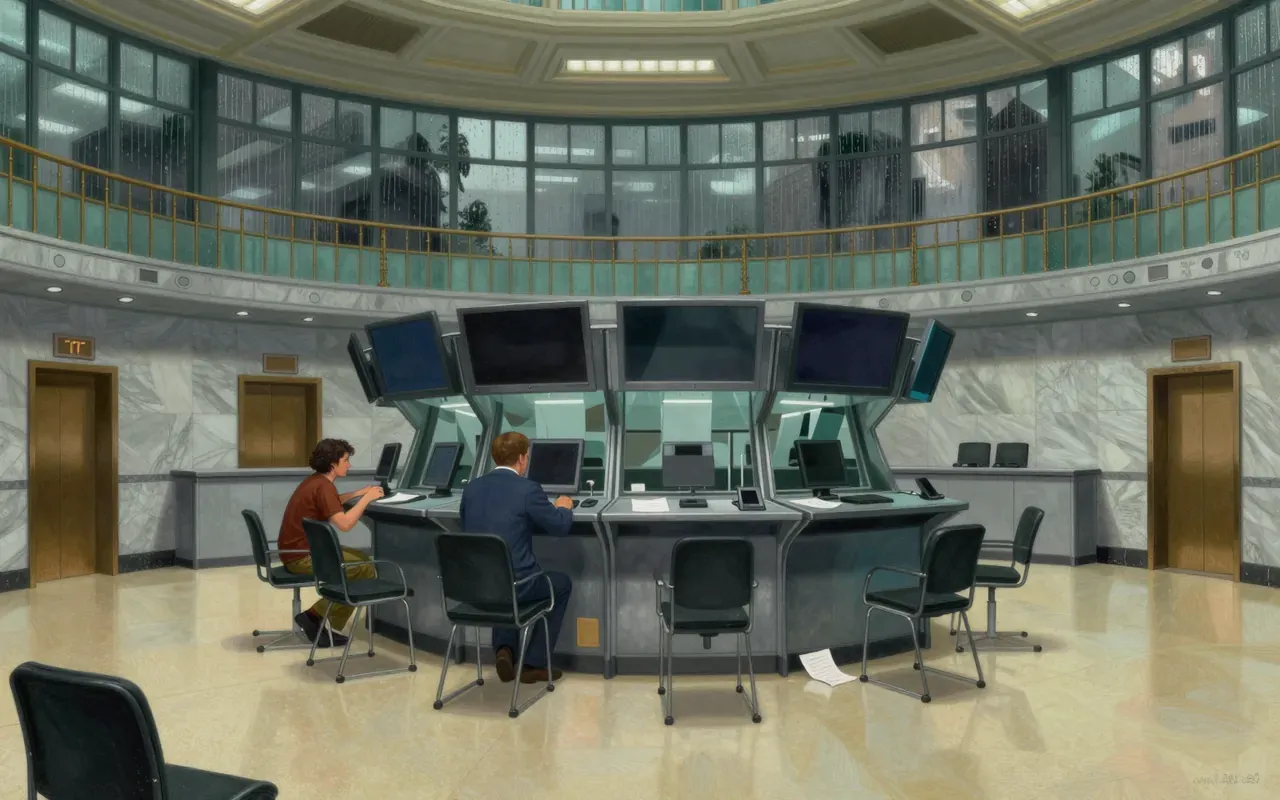
Bear Stearns didn’t run out of money — it ran out of trust, and trust vanished in 72 hours.

Bear Stearns collapsed because its business model depended on continuous short-term funding — and when counterparties stopped rolling over repo loans, liquidity vanished faster than capital could be deployed. Its balance sheet held value, but confidence did not. The firm was sold to JPMorgan Chase in a Fed-brokered fire sale.

Chapters & takeaways4
  1. 0:58
    The 72-Hour Drain

    Liquidity collapsed from $18.1 billion to $2 billion in three days — a mechanical failure, not a slow burn.

  2. 2:22
    Rumours as Infrastructure

    Subprime exposure triggered rumours — and the rumours became the crisis before the losses materialised.

  3. 4:08
    Leverage Without Liquidity

    A highly leveraged, illiquid balance sheet turned counterparty risk into a cascade no internal reserves could contain.

  4. 5:52
    Confidence, Not Capital

    The SEC confirmed: Bear Stearns had capital. It just had no one willing to lend against it.

Worth your time?

Yes. Study the whole thing.

4.5/ 5
What works
  • business/finance
  • business/rise-and-fall
  • business/risk
What does not
  • business/scandals
  • business/startups-and-venture
  • business/founders
Study it if
  • investors
  • regulators
  • risk-managers
Skip it if
  • consumers
  • entrepreneurs
  • marketers
The written brief1 min read

What the company or idea is

Bear Stearns Companies Inc. was an American investment bank founded in 1923, specialising in trading and brokerage, with heavy exposure to subprime mortgage assets.

How it actually makes money

Bear Stearns made money through proprietary trading, securities underwriting, and brokerage — particularly in mortgage-backed securities and complex derivatives.

What works

Its core brokerage and clearing operations were sound. Its collateral was high-quality. Its collapse was not due to insolvency but to a three-day liquidity drain from $18.1 billion to $2 billion.

What does not

Its reliance on overnight repo financing failed when counterparties refused to roll over loans — exposing a balance sheet that was highly leveraged and illiquid, not insolvent.

What to take from it

Confidence is a functional input in finance — not sentiment, but a real-time operating condition. When it vanishes, liquidity evaporates faster than capital can be raised.

Is it worth your time

Yes. It is a textbook case of how liquidity risk, not solvency, can destroy a firm — and how market psychology operates as infrastructure.

Same desk · Finance4 of 56
11:23
Greensill CapitalGreensill Capital collapsed because it treated speculative future sales as if they were cash — then leveraged them through opaque fund structures. Its $5 billion exposure to GFG Alliance and reliance on Credit Suisse–managed funds to buy unsecured notes created a system with no real collateral, no insurance, and no fallback. It filed for insolvency on 8 March 2021 after failing to repay a $140 million loan.
11:20
BNP Paribas1848BNP Paribas is a French multinational universal bank and financial services holding company, founded in 2000 via merger—not 1848. It makes money through universal banking activities. Its 2007 sub-prime fund closures gave it early crisis credibility, but its scale came from state-supported acquisitions of Fortis in Belgium and Luxembourg (2008) and BGL in Luxembourg (2009), making it the eurozone’s largest bank by deposits. It pled guilty in 2014 to falsifying records to evade U.S. sanctions, paid $8.9 billion—the largest such fine—and only had enforcement lifted in 2024 after overhauling compliance. Its story is one of crisis navigation via public capital and regulatory penalty—not product, strategy or innovation.
10:51
Bankruptcy of Lehman Brothers2008Lehman Brothers collapsed because it was not a bank in practice — it was a leveraged real estate bet masquerading as one. Its $680 billion balance sheet rested on $22.5 billion of capital. When property values dipped, equity vanished. The Federal Reserve tried to broker a rescue — but only after a credit downgrade forced action. Its bankruptcy filing, the largest in U.S. history, triggered immediate global dislocation. The lesson is structural: regulation follows form, not function — and when function diverges, failure is not a risk. It is arithmetic.
9:42
Fitch Ratings1913Fitch Ratings is a US-SEC-designated credit rating agency that positions itself as the decisive third voice among the Big Three. It earned revenue by rating debt—including complex instruments like CDOs—even as it internally flagged systemic risks in related products like CPDOs. Its 2007 CPDO warning shows analytical capacity; its $125 million in losses on $340.7 million of AAA-rated CDOs shows operational failure. The gap between its self-presentation and its real-world outcomes is the story.
Up next in Business

RJR Nabisco

Kohlberg Kravis Roberts · 1986 · 10:46

A guaranteed $109 bid beat a $112 bid — not because it valued the company better, but because it shifted all uncertainty onto workers and creditors.

10:46